Updated July 15th, 2025
You probably wouldn’t stand behind a car’s tailpipe while the engine’s running—not just to avoid getting burned, but because you know the exhaust contains a stew of toxic fumes, including carbon monoxide (CO). What you might not realize, however, is that you could be inhaling dangerous levels of that same noxious gas in your home without realizing it. According to a ULSE study, one-third of U.S. adults (roughly 86 million people) have no way to detect household CO leaks, leaving them (and perhaps you) vulnerable to carbon monoxide poisoning. Sure, a CO detector or alarm could alert you when CO is present, but some air purifiers offer extra protection by removing the gas from indoor air.
Stick around to learn everything you need about carbon monoxide—what it is, where it comes from, and its potential health effects. We’ll also explain how some air purifiers can help protect you and your loved ones from CO poisoning.
Hold On, What is Carbon Monoxide?
Carbon monoxide (CO) is an invisible, tasteless, and virtually odorless gas that can be extremely dangerous to humans and animals at high enough concentrations. It is produced from burning fossil fuels like coal, wood, charcoal, oil, kerosene, propane, or natural gas and can originate from a myriad of sources in the household, including:
Furnaces and boilers
Gas water heaters
Gas clothes dryers
Fireplaces (gas or wood-burning)
Wood-burning stoves
Gas stoves and ovens
Portable generators
Automobile exhaust from attached garages
Charcoal grills and camp stoves
Blocked chimneys or flues
Kerosene or gas space heaters
Tobacco smoke
Usually, the amount of carbon monoxide released from some sources isn’t a cause for concern in areas with good airflow. But if they’re expelled in a partly closed or closed space, like an attached garage, it can harm people and pets. Signs that CO might be present in your home include unusually high humidity levels, persistent condensation on windows and walls, air that feels stuffy or stagnant, and the appearance of soot or moisture around burners or vents.
What Makes Carbon Monoxide So Toxic?
Carbon monoxide isn’t called “The Invisible Killer” for nothing. Because it has no taste, color, or odor, you can’t tell it’s there without using special equipment. That means it can kill you before you can be aware it is in your home, the EPA warns. When a person inhales high levels of CO, the gas builds up in the blood and binds to hemoglobin, a protein in the red blood cells that carries oxygen from the lungs to various other parts of the body. The Mayo Clinic explains that the CO kicks the oxygen (O2) off the hemoglobin and takes its place, reducing the amount of oxygen the body can absorb from the air and limiting the amount that reaches organs and tissues. And according to WebMD, insufficient oxygen in the body can cause irreversible damage to the brain, heart, liver, and other organs.
Another thing that makes CO incredibly dangerous is that some of its symptoms can mimic other illnesses. For instance, many people exposed to carbon monoxide may mistake it for the flu or food poisoning, and can often get misdiagnosed when they go to a doctor. Consequently, they may keep inhaling small amounts of CO that could build up to dangerous levels in the body over time and cause more serious outcomes.
Symptoms of Carbon Monoxide Poisoning
The effects of CO exposure can vary significantly from person to person depending on a range of factors, including age, overall health, and the concentration and length of exposure. Research shows that low levels of CO exposure can cause fatigue in healthy people and chest pain in people with heart disease, while moderate levels are linked to angina, impaired vision, and reduced brain function. Per the EPA, higher concentrations can cause several more serious side effects, including:
impaired vision and coordination
headaches
dizziness
confusion
nausea
flu-like symptoms that clear up after leaving home
fatal at very high concentrations
According to WebMD, the symptoms of CO poisoning can take up to two hours to appear in people exposed to low concentrations, while it can take as little as five minutes at higher levels.
Who’s Most at Risk for Carbon Monoxide Poisoning?
While no one’s immune to carbon monoxide poisoning, it can be particularly hazardous for infants, children, pregnant women, older folks, and people with preexisting conditions like chronic heart disease, anemia, or breathing problems. People who are asleep or have used illicit drugs, alcohol, or medicines that make them very sleepy also face a grave risk for CO poisoning, as they can die from the condition before they experience symptoms.
Do Air Purifiers Help with Carbon Monoxide Removal?
Whether you’ve purchased an air purifier or are considering it, you might wonder if it can trap carbon monoxide in your home. The short answer is that it depends on the types of filters the air purifier uses. Ideally, the purifier should include a medical-grade HEPA 13 filter and an activated carbon filter, and there are strong reasons for this.
Medical-Grade HEPA 13 Filter
HEPA stands for “High-efficiency particulate air.” Medical-grade HEPA 13 filters are among the most powerful and efficient, eliminating at least 99.97% of particles as tiny as 0.3 microns and capturing 99.95% as small as 0.1 microns. This makes HEPA 13 filters incredibly effective at catching solid pollutants like dust, pet dander, pollen, and even some bacteria, but not for harmful gases like carbon monoxide. The main job of HEPA 13 filters when it comes to CO is to trap the larger particles so the activated carbon filter can last longer and work better to stop the gas in its tracks.
Activated Carbon Filter
Whereas HEPA filters focus on capturing large particles, activated carbon filters neutralize volatile organic compounds (VOC), odors, chemical fumes, and gases like CO. The carbon has a porous bed with a large surface area. As air passes through the filter, the gas molecules stick to the surface and become trapped until the filter surface becomes saturated. This process is called adsorption.
Related: 7 Benefits of an Air Purifier for Your Health and Home | How Air Purifiers Help Reduce Allergies and Which One to Buy
5 Other Ways to Protect Against Carbon Monoxide
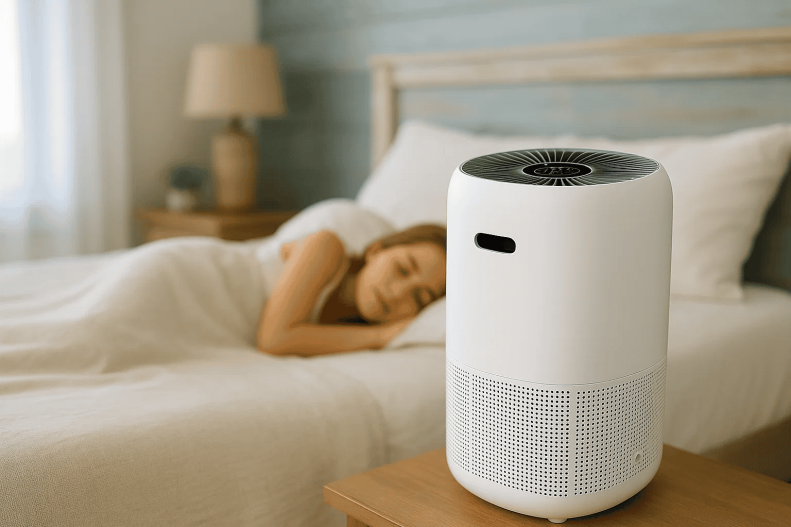
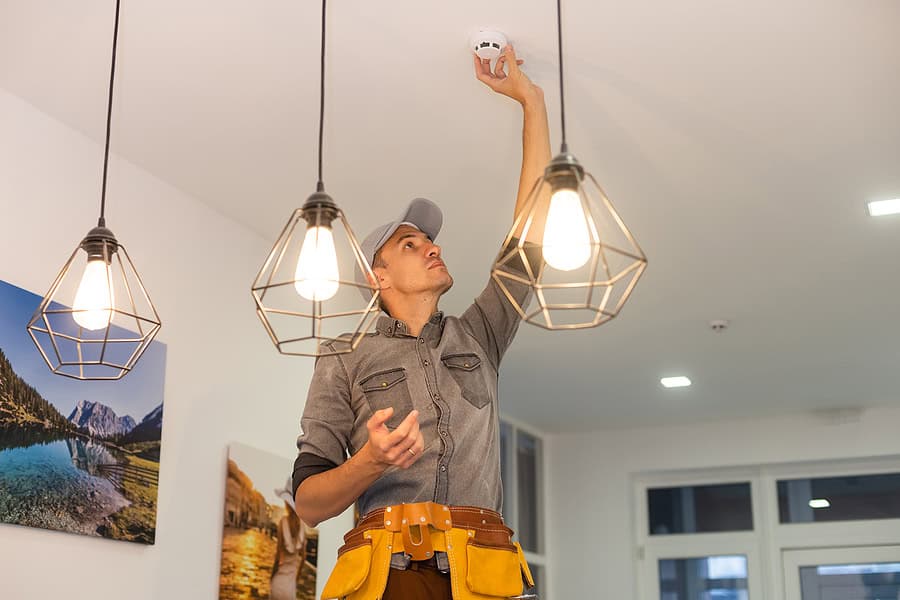
Beyond placing a CO detector (or a few) around your home and bringing a quality HEPA carbon air purifier into your home, the following measures can help reduce your exposure to carbon monoxide in your living or working space and lower your risk of CO poisoning.
Keep vents clear.
Proper airflow is crucial when it comes to preventing CO buildup indoors. So, ensure all vents, chimneys, and flues are clear of debris, nests, or snow. If you use a fireplace, always keep the flue open while it’s in use and until the embers are completely out. And remember, never use a gas oven or stove to heat your home; these are designed for cooking, not heating, and can quickly fill your space with dangerous CO gas.
Use generators and outdoor equipment safely.
Grills, camp stoves, and portable generators belong outside, not inside your kitchen or basement. If the power goes out and you need to run a generator, ensure it’s placed at least 20 feet away from your house, windows, and doors. Even a slightly open window nearby can let CO seep indoors.
Don’t idle cars in the garage.
It might seem harmless to warm up your car in the garage, especially in winter, but carbon monoxide can waltz into your home even with the door open. Pull your car into the driveway first if you need to warm up your vehicle.
Never use outdoor appliances indoors.
This one’s big: It might be tempting during a power outage or bad weather, but running these devices indoors or in the garage can fill your home with carbon monoxide in minutes. Always keep them at least 20 feet from your house.
Watch for warning signs.
Be alert for symptoms of CO poisoning, like headaches, dizziness, nausea, or confusion, especially if more than one person in your home feels sick at the same time. If you suspect CO exposure, get everyone outside immediately and call for help.
Final Thoughts
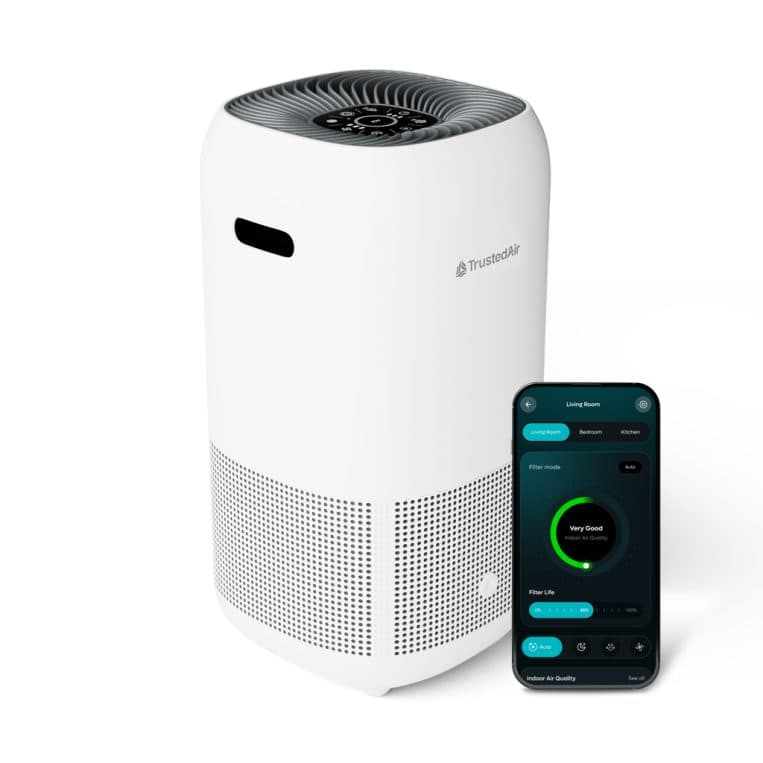
TrustedAir’s Smart HEPA Air Purifier
Because carbon monoxide is tasteless, scentless, colorless, and highly toxic, the very thought of it lurking in your home can evoke feelings of fear and worry. However, you’re far from defenseless against CO poisoning. You can dramatically lower your risk by familiarizing yourself with the potential sources of CO in your home and developing habits like venting appliances outdoors, keeping vents clear, and running outdoor equipment outdoors. Pair these measures with a functioning CO detector and the right smart air purifier, and you’ll have peace of mind knowing your home and loved ones are safe from this invisible threat.
If you need help finding the best air purifier for carbon monoxide removal, call TrustedAir at 877-869-1507 or write to us today. Our friendly customer service team is always ready to help.
FAQs
Can air purifiers remove carbon monoxide from indoor air?
Some air purifiers can remove carbon monoxide as long as they’re equipped with a high quality activated carbon filter. These filters use adsorption to trap gases like CO, but even then, they should complement (not replace) carbon monoxide detectors.
Do air purifiers detect carbon monoxide?
No, air purifiers do not detect carbon monoxide. Most purifiers are designed to filter particles and gases using HEPA and activated carbon filters, but they lack sensors to detect carbon monoxide levels. For safety, always use a carbon monoxide detector, which is specifically engineered to sense and alert you to dangerous CO levels in your home.
What type of air purifier helps with carbon monoxide exposure?
To reduce carbon monoxide levels, look for an air purifier with an activated carbon filter and a medical grade HEPA filter. The HEPA filter captures particles, while the activated carbon filter helps adsorb gases like CO and VOCs.
Is it safe to rely on an air purifier instead of a carbon monoxide detector?
No. Air purifiers can support cleaner air, but they do not alert you when CO levels are dangerous. A carbon monoxide detector is essential for safety and should always be used alongside any air purification system.
What are signs of carbon monoxide in a house?
Common signs include stale or stuffy air, excessive condensation on windows, soot around burners, and flu-like symptoms that improve when leaving the home. These indicators suggest poor ventilation and potential CO buildup.
Does carbon monoxide affect air quality?
Yes. Carbon monoxide is a harmful indoor air pollutant that reduces the oxygen your body can absorb. While it doesn’t affect particulate counts, it significantly degrades the safety of the air you breath and that’s why we highly recommend an air purifier.
Brian Wyatt is the Chief Air Quality Specialist and the Lead Researcher at TrustedAir Labs. With over a decade of experience in environmental health, Brian has helped thousands better understand the impact of air on sleep, allergies, long term health and more.
 Same Day US Shipping
 Beyond placing a CO detector (or a few) around your home and bringing a quality HEPA carbon air purifier into your home, the following measures can help reduce your exposure to carbon monoxide in your living or working space and lower your risk of CO poisoning.